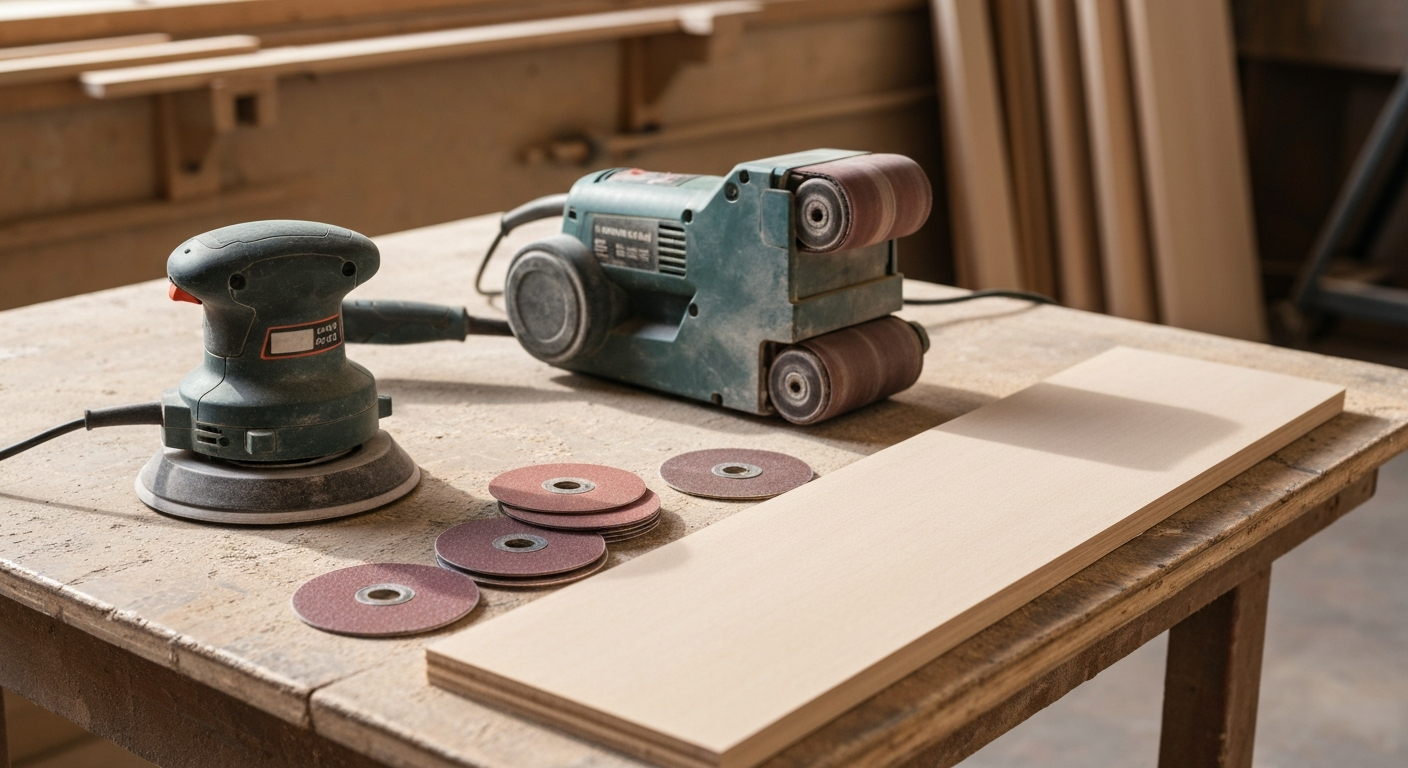
Best Random Orbital Sanders: 6 Models Tested
Hands-on review of 6 random orbital sanders from budget to premium. We tested dust collection, vibration, pad speed, and finish quality to find the best sander for every budget.
 Build Coded Editorial
 Why a Random Orbital Sander Is Essential
Sanding is the unglamorous bridge between building and finishing. Nobody gets excited about it, but skip it or do it poorly, and even the best-built project looks rough. A random orbital sander is the tool that makes sanding tolerable — and even satisfying once you get the hang of it.
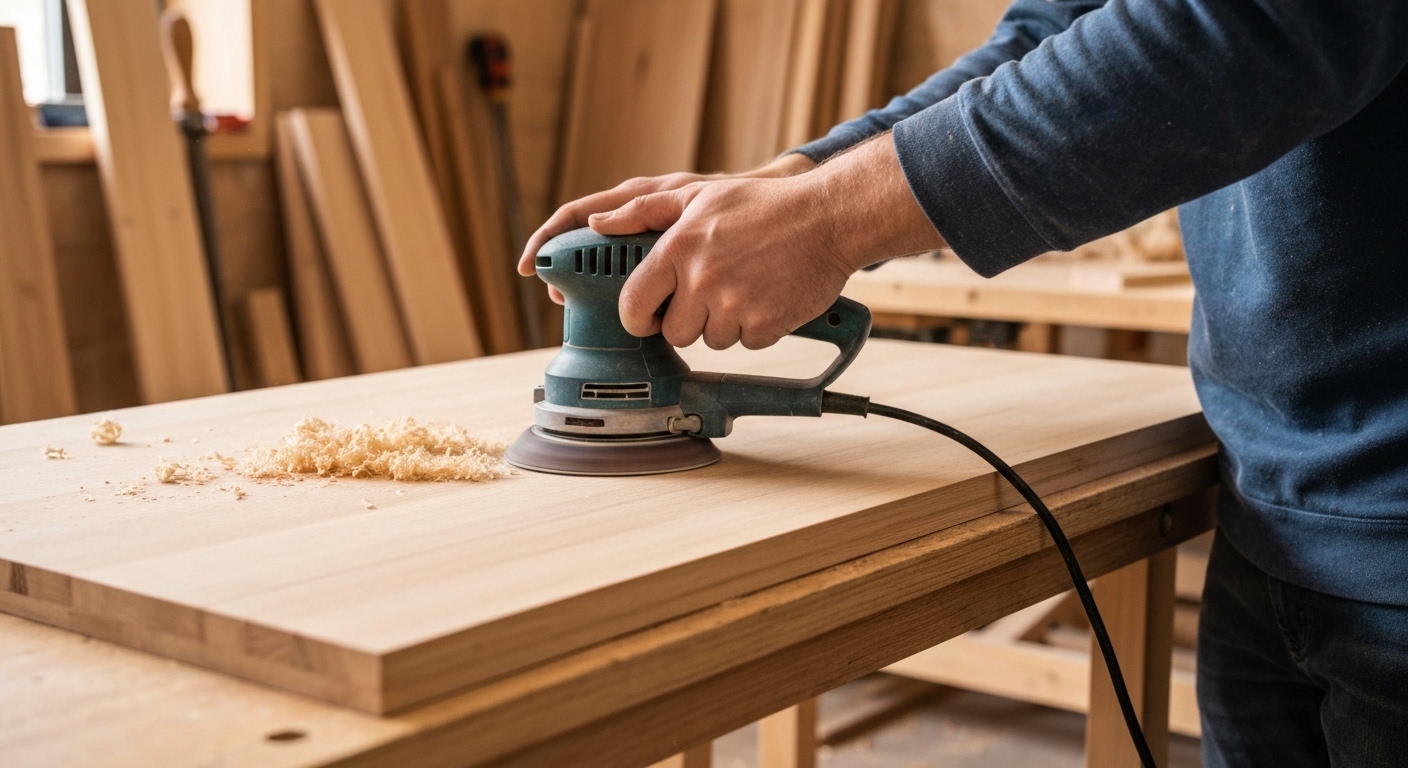
The “random orbital” part is what makes these sanders special. The pad spins and simultaneously oscillates in tiny circles. This dual motion means no single abrasive grain follows the same path twice, which virtually eliminates the swirl marks that plague standard orbital (quarter-sheet) sanders. The result is a consistently smooth surface that takes stain and finish evenly.
Every woodworker needs one. The question is which one.
How We Evaluated
I tested all six sanders on the same material — hard maple face frames and pine shelving — using the same sandpaper (Diablo 5” hook-and-loop discs) through the same progression: 80, 120, 150, 220 grit. Here’s what I evaluated:
- Finish quality: How smooth is the surface after sanding through the grits? Any visible swirl marks or scratches?
- Dust collection: How much dust stays in the bag or vacuum versus floating into the shop?
- Vibration: How comfortable is the sander during extended use? Does it cause hand fatigue?
- Noise level: Measured with a decibel meter at 12 inches.
- Pad speed/aggression: How quickly does it remove material at 80 grit?
- Build quality: Materials, switch quality, cord or battery, overall feel.
- Value: Performance per dollar.
1. Best Overall: DEWALT DWE6423 5” Variable Speed Random Orbital Sander
Price range: $65-80
The DEWALT DWE6423 does everything well and nothing poorly. It’s the sander I reach for most often in my own shop, and the one I recommend to anyone who asks “which sander should I buy?”
What Makes It Great
The dust-sealed switch is a small detail that makes a big difference — sanding dust destroys switches on cheaper tools, and the DEWALT’s sealed design means this sander will still be switching on and off cleanly years from now. The separate dust bag has a port that connects directly to a shop vacuum, and the dust collection is genuinely good — maybe 75-80% of dust captured even with just the bag.
Variable speed (8,000-12,000 OPM) lets you dial it back for finish sanding or crank it up for aggressive material removal. The rubber-overmolded body is comfortable and absorbs vibration well. After 30 minutes of continuous sanding, my hand didn’t feel like it was vibrating the way it does with some cheaper sanders.
Where It Falls Short
The pad brake (the thing that stops the pad from spinning when you lift it off the work) wears out over time on some units. It’s a minor annoyance, not a deal-breaker. The dust bag, while functional, fills up fast on heavy sanding — you’ll want to hook up a vacuum for serious work.
The Verdict
If you buy one sander and never think about sanders again, make it this one.
Buy it: DEWALT DWE6423 5” Random Orbital Sander
2. Best Value: Makita BO5041 5” Random Orbital Sander
Price range: $70-85
The Makita BO5041 is a slightly different design — it’s a larger-bodied “barrel grip” sander with a pad control system that limits speed at startup. This might be the most comfortable sander on this list for extended use.
What Makes It Great
The pad control system is Makita’s standout feature. When you lift the sander off the work, the pad speed automatically reduces, preventing swirl marks from a free-spinning pad touching down at full speed. It also starts at a lower speed to prevent the sander from skating across the surface on startup.
Vibration is very low — noticeably lower than the DEWALT. If you sand for long periods, this matters a lot. The variable speed range is wide (4,000-12,000 OPM), and the 3-amp motor has plenty of power.
Where It Falls Short
It’s larger and heavier than the palm-grip DEWALT, which can be less maneuverable on small parts. The dust bag connection is fine but not as secure as some competitors — it can pop off if you bump it. Dust collection with just the bag is decent but not exceptional.
The Verdict
The most comfortable sander for marathon sanding sessions. If vibration and ergonomics are your top priorities, this is your pick.
Buy it: Makita BO5041 5” Random Orbital Sander
3. Best Budget: SKIL SR211601 5” Random Orbital Sander
Price range: $35-45
The SKIL is proof that you don’t need to spend $70+ to get a functional random orbital sander. For half the price of the DEWALT, you get a tool that sands wood smooth. Full stop.
What Makes It Great
The price. At $35-45, this sander costs about the same as three packs of quality sandpaper. For a beginner who isn’t sure how much woodworking they’ll do, or someone who needs a second sander for a helper, the SKIL is an excellent low-risk entry point.
It does have variable speed, which is unusual at this price point. The dust collection port accepts a vacuum hose (though the fit is loose). The included dust bag works but — like all included dust bags — is better than nothing and worse than a vacuum.
Where It Falls Short
Vibration is noticeably higher than the DEWALT or Makita. After 20 minutes of continuous use, you’ll feel it in your hand and forearm. The switch feels cheap and probably won’t last as long as the sealed DEWALT switch. The pad adhesion (how well the velcro sticks) wore down faster in testing than the premium brands.
Dust collection with the bag is poor — maybe 50% captured, with the rest floating into the shop air.
The Verdict
A perfectly functional sander at an unbeatable price. Expect to replace it in 2-3 years of regular use, but at this price, you’ll have gotten your money’s worth.
Buy it: SKIL SR211601 5” Random Orbital Sander
4. Best Cordless: DEWALT DCW210B 20V MAX Brushless Random Orbital Sander
Price range: $100-120 (tool only)
Cordless sanders have come a long way. The DEWALT DCW210B is the first battery-powered sander I’ve used that I’d genuinely recommend over a corded model for certain situations.
What Makes It Great
No cord. That sounds simple, but when you’re sanding a large project and constantly repositioning — walking around a table, flipping boards, moving between sawhorses — the freedom from a cord is genuinely liberating. The brushless motor runs smooth and quiet, and a 5Ah battery provides 40-50 minutes of continuous sanding, which is plenty for most sessions.
The sander uses the same 20V MAX battery platform as DEWALT’s drills, saws, and other tools. If you’re already invested in the DEWALT battery ecosystem, you likely already have the battery.
Variable speed control with electronic speed regulation under load keeps the pad spinning at the set speed even when you press down harder.
Where It Falls Short
You need the battery and charger, which adds $50-80 if you don’t already own them. The tool itself is slightly heavier than its corded sibling (the extra weight is the battery), though the balance is good. Runtime drops significantly at maximum speed under heavy load.
Dust collection is excellent when hooked to a vacuum but the included bag is small.
The Verdict
If you’re in the DEWALT 20V ecosystem and value cord freedom, this is a buy. If you’re starting from scratch and don’t have batteries, the corded DWE6423 is a better value.
Buy it: DEWALT DCW210B 20V Brushless Orbital Sander
5. Best for Dust Collection: Festool ETS EC 125/3 EQ-Plus
Price range: $350-400
Yes, it’s a $375 sander. No, that’s not a typo. The Festool ETS EC 125 is in a different league, and its dust collection system is the reason.
What Makes It Great
When connected to a Festool dust extractor (sold separately — brace yourself), this sander captures an almost unbelievable amount of dust. We’re talking 95%+ collection efficiency. The multi-jet stream dust extraction system channels air through the pad and out through the dust port with minimal turbulence. Your shop stays clean, your lungs stay clean, and the sandpaper lasts longer because it’s not clogged with dust.
Beyond dust collection, the sanding experience is sublime. Vibration is essentially nonexistent thanks to the counterbalanced eccentric drive. The pad glides across the surface with a smoothness that’s hard to describe until you’ve felt it. Speed control is precise, and the ergonomics are the best in the business.
Where It Falls Short
The price. The sander alone is $375, and to get the full dust collection benefit, you ideally pair it with a Festool CT dust extractor ($500-800). That’s nearly $1,000 for a sanding system. For professionals who sand daily, that investment pays for itself in health and sandpaper savings. For hobbyists, it’s a hard sell.
The Verdict
The best sander money can buy. Worth it if you sand professionally, have respiratory concerns, or simply demand the best tools. For everyone else, the DEWALT gets you 85% of the way there for 80% less money.
Buy it: Festool ETS EC 125/3 EQ-Plus
6. Best for Beginners: Bosch ROS20VSC 5” Random Orbital Sander
Price range: $60-75
The Bosch ROS20VSC hits a sweet spot of quality, comfort, and price that makes it ideal for someone buying their first sander.
What Makes It Great
The micro-filter dust canister is a step above the fabric bags that most sanders include. It captures finer particles and is easier to empty cleanly. For beginners who may not have a shop vacuum yet, this makes a meaningful difference in shop air quality.
The pad dampening system controls pad speed at startup and when lifting the sander off the work, reducing the risk of swirl marks — a common beginner mistake. Variable speed (7,500-12,000 OPM) covers the full range of sanding tasks.
The body shape is comfortable for a palm grip, and the vibration level is low. It feels like a quality tool without the premium price tag.
Where It Falls Short
The power switch placement is less intuitive than the DEWALT’s. The dust canister, while better than a bag, is still not as effective as a vacuum hookup. The cord is on the shorter side at 10 feet.
The Verdict
A quality sander at a fair price with the bonus of a better-than-average dust canister. If you’re buying your first sander and don’t want to think too hard about it, the Bosch is an excellent choice.
Buy it: Bosch ROS20VSC 5” Random Orbital Sander
Comparison Table
| Model | Price | Power | Speed Range | Weight | Dust Collection | Best For |
|---|---|---|---|---|---|---|
| DEWALT DWE6423 | $65-80 | 3 amp | 8K-12K OPM | 2.9 lbs | Good | Best overall |
| Makita BO5041 | $70-85 | 3 amp | 4K-12K OPM | 3.1 lbs | Good | Comfort/low vibration |
| SKIL SR211601 | $35-45 | 2.8 amp | Variable | 3.0 lbs | Fair | Budget |
| DEWALT DCW210B | $100-120 | 20V | Variable | 3.7 lbs | Good | Cordless freedom |
| Festool ETS EC 125 | $350-400 | 400W | Variable | 2.6 lbs | Excellent | Dust collection |
| Bosch ROS20VSC | $60-75 | 2.5 amp | 7.5K-12K OPM | 3.5 lbs | Good+ | Beginners |
Sanding Tips That Apply to Any Sander
Work Through the Grits
Never skip more than one grit step. A standard progression for furniture is 80 (or 120 if the surface is already fairly smooth), 150, then 220. Each grit removes the scratches from the previous one. Jumping from 80 to 220 means the 220 is trying to remove scratches that are too deep for it, and you’ll waste time and sandpaper.
Let the Sander Do the Work
Pressing down hard doesn’t sand faster. It slows the pad, generates heat, clogs the sandpaper, and creates uneven spots. Hold the sander with just enough pressure to keep it flat on the surface, and let the weight of the tool plus the pad speed do the work. Move slowly — about 1 inch per second.
Change Your Sandpaper
When the sanding slows down noticeably, swap the disc. A fresh disc cuts dramatically faster than a worn one. Sandpaper is cheap; your time isn’t.
Connect to a Vacuum
If you own a shop vacuum, always connect it to your sander. Dust collection isn’t just about cleanliness — removing dust from the sanding surface exposes fresh abrasive, making the sandpaper cut faster and last longer. You’ll notice a genuine improvement in sanding speed and finish quality.
Check Your Work with Light
After sanding, hold the piece at a low angle under a strong light source (a raking light). Scratches, swirl marks, and unsanded areas become immediately visible. This 30-second check prevents hours of frustration after you’ve applied finish and the imperfections suddenly appear.
Recommended sandpaper: Diablo 5” SandNet Disc Variety Pack — These mesh discs last significantly longer than standard discs and resist clogging. They cost more per disc but the longevity makes them cheaper per use.
The Bottom Line
For most woodworkers, the DEWALT DWE6423 is the best random orbital sander you can buy. It’s durable, smooth, well-built, and priced fairly. It’s the sander that stays in your shop for 10 years and never gives you a reason to upgrade.
If budget is tight, the SKIL gets the job done. If comfort matters most, the Makita is outstanding. And if money is no object and dust collection is paramount, the Festool is in a class by itself.
Whatever you choose, pair it with quality sandpaper, connect it to a vacuum when possible, and sand through the grits. Your finish will thank you.
Related reading: Beginner Woodworking Joints Guide