Hardwood vs Laminate Flooring: The Complete Comparison Guide
A detailed comparison of Hardwood Flooring and Laminate Flooring. Learn the key differences, pros and cons, and which one is right for you.
 Build Coded Editorial
 Choosing the right flooring is one of the most impactful decisions you’ll make in any home renovation or new build project. It sets the tone, defines the aesthetic, and significantly influences the comfort and functionality of your space. Among the myriad options available, hardwood and laminate flooring consistently emerge as top contenders, often leaving homeowners in a delightful yet perplexing dilemma. Both offer unique advantages and cater to different needs, budgets, and lifestyles. But how do you discern which one is the perfect fit for your vision? Let’s dive deep into a comprehensive comparison, dissecting every facet of hardwood and laminate to help you make an informed decision that you’ll love for years to come.
What Is Hardwood Flooring?
Hardwood flooring is exactly what it sounds like: planks milled from solid pieces of timber. This natural material has been a staple in homes for centuries, prized for its timeless beauty, durability, and the way it adds warmth and character to any room. Each plank is a solid piece of wood, typically 3/4 inch thick, and comes in various species like oak, maple, cherry, walnut, and exotic woods. The unique grain patterns, knots, and color variations inherent in each species mean that no two hardwood floors are ever exactly alike, offering a truly bespoke aesthetic.
Hardwood flooring can be purchased unfinished, allowing for custom staining and sealing on-site, or prefinished, which comes with a factory-applied sealant and is ready for installation. The construction allows it to be sanded and refinished multiple times over its lifespan, restoring its original luster and effectively giving it a new lease on life. This characteristic is a major factor in its incredible longevity and ability to hold its value. Hardwood is typically installed by nailing or stapling planks to a wooden subfloor, though some engineered hardwood options can be floated or glued down. Its natural composition makes it sensitive to moisture and extreme temperature fluctuations, which can cause expansion, contraction, or warping if not properly managed.
What Is Laminate Flooring?
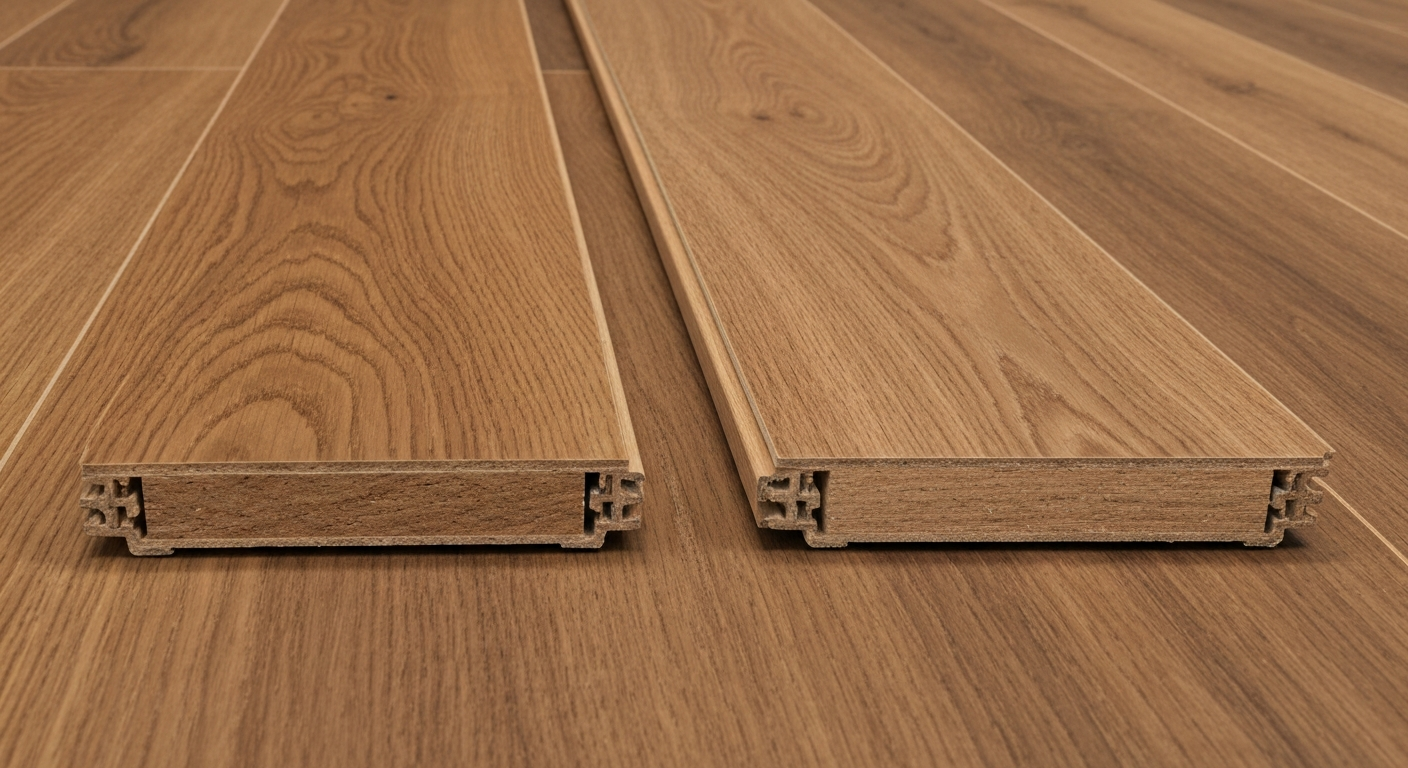
Laminate flooring, in stark contrast to hardwood, is a synthetic product designed to mimic the appearance of wood, stone, or other natural materials. It’s an engineered marvel, constructed from several layers fused together under high pressure. The core layer is typically made from high-density fiberboard (HDF), providing stability and impact resistance. Above this is the photographic layer, a high-resolution image of wood grain, stone, or tile, which gives laminate its convincing aesthetic. This image layer is then protected by a clear, tough wear layer, often infused with aluminum oxide, which makes laminate highly resistant to scratches, dents, and fading. Below the HDF core is a backing layer that provides structural stability and moisture resistance.
Laminate planks are typically designed for easy installation, often featuring a tongue-and-groove or click-lock system that allows them to be “floated” over an existing subfloor without the need for adhesives or fasteners. This DIY-friendly aspect has contributed significantly to its popularity. While laminate offers a wide array of styles and patterns, its synthetic nature means it cannot be sanded or refinished like hardwood. Once the wear layer is compromised or the aesthetic is outdated, the entire plank typically needs to be replaced. However, advancements in manufacturing have made modern laminate incredibly realistic and resilient, offering a practical and attractive alternative to natural wood.
Hardwood vs Laminate Flooring: Head-to-Head Comparison Table
| Feature | Hardwood Flooring | Laminate Flooring |
|---|---|---|
| Composition | Solid planks of natural wood | Multi-layered synthetic product (HDF core, image, wear layer) |
| Appearance | Authentic, unique grain, natural variations | Realistic photographic image, uniform patterns |
| Durability | Very durable, can dent/scratch, but refinishable | Highly scratch/dent/fade resistant, but not refinishable |
| Water Resistance | Poor; swells, warps with moisture exposure | Moderate; surface resistant, but core susceptible to water damage |
| Maintenance | Regular sweeping/vacuuming, occasional specialized cleaning | Easy; sweeping/vacuuming, damp mopping |
| Longevity | 75-100+ years (with proper care and refinishing) | 15-25 years (depending on quality and traffic) |
| Cost (Material) | High (typically $6 - $15+ per sq. ft.) | Low to Moderate (typically $2 - $8 per sq. ft.) |
| Installation | Complex, professional recommended (nail/staple) | DIY-friendly, click-lock floating installation |
| Resale Value | Significantly increases home value | Offers good value, but less impact than hardwood |
| Eco-Friendliness | Renewable resource, can be sustainable, long lifespan | Made from recycled content, but not easily recyclable |
Key Differences Detailed
Now that we’ve seen a snapshot, let’s unpack these differences in more detail, as each factor plays a crucial role in determining the best flooring for your home.
Appearance & Aesthetics
The visual appeal of your flooring is often the first thing people notice, and here, hardwood and laminate diverge significantly.
Hardwood Flooring: There’s an undeniable elegance and warmth that only natural wood can provide. Each plank tells a story, with its unique grain patterns, knots, and subtle color variations that deepen and evolve over time, developing a rich patina. Hardwood offers an authentic texture and feel underfoot that simply cannot be replicated. It comes in a vast array of species, each with its own distinct character, from the classic elegance of oak to the rich warmth of cherry or the contemporary appeal of maple. The ability to stain and finish hardwood to match specific decor styles further enhances its versatility. For many, the organic beauty and timeless charm of hardwood are unparalleled and contribute to a sense of luxury and permanence in a home.
Laminate Flooring: Modern laminate has come a long way in mimicking the look of real wood. High-resolution photographic layers can create incredibly convincing representations of various wood species, complete with realistic grain patterns, knots, and even distressed textures. From a distance, it can be difficult to distinguish high-quality laminate from real wood. However, upon closer inspection, or when you notice repeating patterns across multiple planks, the synthetic nature becomes apparent. The texture, while sometimes embossed to simulate wood grain, often lacks the deep, natural feel of real wood. While laminate offers a consistent appearance and a wide range of styles, it ultimately lacks the unique, evolving character and inherent value of natural timber.
Durability & Longevity
When investing in flooring, its ability to withstand daily life and last for years is a critical consideration.
Hardwood Flooring: Hardwood is renowned for its durability and incredible longevity. A well-maintained hardwood floor can last 75 to 100 years or even longer, often outliving the home itself. While it can be susceptible to scratches, dents, and dings from heavy traffic, pet claws, or dropped objects, its greatest advantage is its refinishability. When the surface becomes worn or damaged, it can be sanded down and refinished multiple times throughout its lifespan, effectively restoring it to a like-new condition. This not only extends its life but also allows homeowners to change the stain color if their style evolves. However, hardwood is vulnerable to moisture, which can cause warping, cupping, or buckling, and it can fade in direct sunlight over many years.
Laminate Flooring: Laminate is engineered for resilience. Its tough wear layer makes it highly resistant to scratches, dents, fading from UV light, and general wear and tear, often outperforming solid hardwood in these specific aspects. This makes it an excellent choice for homes with pets, children, or high-traffic areas. However, once the wear layer is compromised, the plank cannot be refinished. Deep scratches or significant damage will require the individual plank to be replaced, which can sometimes be challenging to match perfectly if the product line has been discontinued. While durable against surface wear, the HDF core of laminate is highly susceptible to water damage. If moisture penetrates through seams or damaged areas, the core can swell and buckle, leading to irreversible damage. Its average lifespan is typically 15-25 years, though higher-quality options can last longer.
Maintenance & Care
How much effort are you willing to put into keeping your floors looking pristine?
Hardwood Flooring: Hardwood floors require regular maintenance to preserve their beauty. This typically involves daily or weekly sweeping, vacuuming (with a hard floor attachment), and occasional damp mopping with a wood-specific cleaner. It’s crucial to avoid excessive water, as moisture is hardwood’s arch-nemesis. Spills should be wiped up immediately. Over time, depending on traffic and wear, hardwood will eventually need to be refinished, a process that involves sanding away the old finish and applying a new one. This can be a significant undertaking, often requiring professionals and temporarily vacating the room. However, with proper care, hardwood’s natural beauty only improves with age.
Laminate Flooring: Laminate is celebrated for its low-maintenance nature. Its durable, sealed surface makes cleaning a breeze. Regular sweeping or vacuuming is usually sufficient to remove dirt and debris. For deeper cleaning, a damp mop (not wet!) with a mild cleaner specifically designed for laminate is all that’s needed. Unlike hardwood, laminate doesn’t require waxing or polishing, and its wear layer protects against most stains. The key is to avoid excessive water, as standing water can seep into the seams and damage the HDF core. Its resistance to scratches and fading means it retains its “new” look for longer without the need for periodic refinishing.
Water Resistance
This is a critical factor, especially for areas like kitchens, bathrooms, or basements.
Hardwood Flooring: Hardwood and water do not mix well. While some surface spills can be quickly wiped away without issue, prolonged exposure to moisture or high humidity will cause hardwood to swell, warp, cup, or buckle. It is generally not recommended for moisture-prone areas like full bathrooms, laundry rooms, or basements where humidity levels can fluctuate significantly. Even in kitchens, careful consideration and immediate spill cleanup are essential. Engineered hardwood, with its layered construction, offers slightly better moisture stability than solid hardwood but is still not waterproof.
Laminate Flooring: Laminate offers better surface-level water resistance than hardwood due to its protective wear layer. Spills can sit on the surface for a short period without penetrating. However, laminate is not waterproof. If water seeps into the seams between planks or if a plank is damaged, the HDF core will absorb the moisture, swell, and cause irreversible damage. While some manufacturers offer water-resistant or even “waterproof” laminate products that have enhanced core materials and tighter locking systems, these are still not impervious to all forms of water damage, especially prolonged flooding. For areas with high moisture, even these specialized laminates should be chosen with caution.
Installation
The ease and cost of installation can greatly influence your overall project budget and timeline.
Hardwood Flooring: Installing solid hardwood is generally a more complex and labor-intensive process, typically requiring professional expertise. It usually involves nailing or stapling the planks directly to a plywood subfloor. This method requires specialized tools and a precise approach to ensure a level, secure, and gap-free installation. Solid hardwood needs time to acclimate to the room’s temperature and humidity before installation to prevent future expansion or contraction issues. Engineered hardwood, while still often requiring professional installation, can sometimes be glued down or even floated, offering slightly more versatile options. The cost of professional hardwood installation can add significantly to the overall project budget.
Laminate Flooring: One of laminate’s biggest selling points is its DIY-friendly installation. Most laminate planks feature a “click-lock” or “tongue-and-groove” system, allowing them to be snapped together without glue or nails. This creates a “floating floor” that rests on top of the subfloor, often with a foam underlayment for sound absorption and moisture protection. This makes installation much faster and less expensive, as many homeowners feel confident tackling it themselves. While professional installation is still an option, the relative ease of DIY can lead to substantial savings on labor costs.
Cost
Budget is almost always a primary consideration for any home improvement project. For a deeper dive into managing your renovation expenses, check out our guide on Mastering Your DIY Home Renovation Budget.
Hardwood Flooring: Hardwood flooring represents a significant upfront investment. Material costs typically range from $6 to $15+ per square foot, depending on the wood species, grade, and finish. Installation costs for solid hardwood can add another $3 to $8 per square foot, bringing the total installed cost to a considerable sum. However, when considering its exceptional longevity and the value it adds to your home, the long-term cost-effectiveness can be quite favorable, especially when factoring in multiple refinishes over its lifespan.
Laminate Flooring: Laminate flooring is a much more budget-friendly option, making it accessible to a wider range of homeowners. Material costs typically fall between $2 and $8 per square foot, with higher-end options pushing towards the top of that range. If you opt for DIY installation, your labor costs are zero. Even with professional installation (which might cost $2 to $5 per square foot), the total installed cost of laminate remains considerably lower than hardwood. While its lifespan is shorter, its initial affordability makes it an attractive choice for those looking for a stylish floor without breaking the bank.
Resale Value
How does your flooring choice impact your home’s market appeal and appraisal?
Hardwood Flooring: Hardwood floors are consistently cited as one of the top features that increase a home’s value and appeal to prospective buyers. They are widely regarded as a premium upgrade that signals quality and luxury. Many buyers are willing to pay a premium for homes with existing hardwood, seeing it as a timeless investment that won’t need immediate replacement. The ability to refinish and change the stain color also adds to its long-term desirability, as new owners can customize it to their taste. For more ideas on how strategic upgrades can boost your home’s worth, explore our article on Increase Home Value with Strategic Upgrades.
Laminate Flooring: While laminate flooring offers a clean, attractive, and durable surface, it generally does not command the same resale value premium as hardwood. Buyers often perceive it as a more economical choice. While a well-maintained, high-quality laminate floor will certainly be preferred over old, worn carpeting or vinyl, it typically won’t be a deal-breaker or a significant value-adder in the same way hardwood is. It provides good functional value but less aspirational value in the real estate market.
Eco-Friendliness
For those mindful of their environmental footprint, the material sourcing and lifecycle of flooring are important.
Hardwood Flooring: Hardwood can be a very eco-friendly option, provided it’s sourced responsibly. Wood is a renewable resource, and many manufacturers adhere to sustainable forestry practices, earning certifications like FSC (Forest Stewardship Council). Its extremely long lifespan means fewer resources are consumed over time compared to materials that need frequent replacement. When it eventually reaches the end of its life, hardwood is biodegradable. However, the manufacturing and transportation processes still consume energy, and some finishes can contain VOCs (Volatile Organic Compounds), though low-VOC options are increasingly available. For more information on sustainable choices, check out our Eco-Friendly Building Materials Guide.
Laminate Flooring: Laminate flooring often contains a significant percentage of recycled wood content in its HDF core, which is a positive environmental aspect. However, its synthetic nature makes it more challenging to recycle at the end of its life. While it doesn’t deplete natural timber forests, the manufacturing process for its various layers, especially the resins and plastics, requires energy and can involve chemicals. Its shorter lifespan compared to hardwood also means it needs to be replaced more frequently, contributing to landfill waste. Advancements are being made to create more environmentally friendly laminate options, but it generally lags behind sustainably sourced hardwood in terms of overall eco-friendliness.
Who Should Choose Hardwood Flooring?
You should consider hardwood flooring if:
- You prioritize long-term value and timeless aesthetics: Hardwood offers unmatched beauty that never goes out of style and significantly boosts your home’s resale value.
- You’re planning to stay in your home for many years: The initial investment pays off over decades, especially with the ability to refinish it multiple times.
- You appreciate natural materials: The unique character, warmth, and feel of real wood are important to you.
- You have a higher budget: You’re prepared for the higher upfront costs of material and professional installation.
- You don’t mind the maintenance: You’re willing to commit to the specific cleaning and eventual refinishing needs of hardwood.
- You’re installing in low-moisture areas: Living rooms, dining rooms, bedrooms, and hallways are ideal locations.
Who Should Choose Laminate Flooring?
Laminate flooring is likely the better choice for you if:
- You have a limited budget: It offers a beautiful wood-look aesthetic at a fraction of the cost of hardwood.
- You need high durability and low maintenance: Its scratch, dent, and fade resistance, combined with easy cleaning, make it perfect for busy households with kids and pets.
- You’re a DIY enthusiast: The click-lock installation system makes it a great project for homeowners looking to save on labor costs.
- You want a consistent look: Laminate provides uniform patterns and colors without the natural variations of wood.
- You’re looking for a temporary or shorter-term solution: For rental properties or homes where you don’t plan to stay for decades, laminate offers excellent value.
- You’re installing in moderately moist areas (with caution): While not waterproof, some high-quality, water-resistant laminates can be considered for kitchens or powder rooms, but always with careful research and immediate spill cleanup.
Can You Use/Have Both?
Absolutely! There’s no rule saying you must choose one type of flooring for your entire home. In fact, combining hardwood and laminate can be a very practical and aesthetically pleasing solution. Many homeowners opt for hardwood in high-impact areas where its beauty and value are most appreciated, such as living rooms, dining rooms, and master bedrooms. Then, they might choose a high-quality, complementary laminate for areas that require more resilience or have higher moisture exposure, like kitchens, playrooms, mudrooms, or even basements. This approach allows you to leverage the specific advantages of each material while managing your budget effectively. Just ensure that the transition between the two flooring types is handled smoothly with appropriate transition strips, and that the colors and styles complement each other to maintain a cohesive flow throughout your home.
The Verdict
Ultimately, the choice between hardwood and laminate flooring boils down to your priorities, lifestyle, and budget. Hardwood offers unparalleled natural beauty, an incredible lifespan, and significant long-term value, making it a premium, timeless investment for those seeking authenticity and permanence. It’s a statement of quality that truly enhances a home’s character. Laminate, on the other hand, provides an exceptionally practical, durable, and affordable alternative that beautifully mimics the look of wood. It’s a champion of convenience, offering easy installation, low maintenance, and impressive resistance to daily wear and tear.
There’s no single “better” option; there’s only the best option for your specific needs. Consider how you live in your home, what aesthetic you’re aiming for, how much maintenance you’re willing to undertake, and what your financial parameters are. By weighing these factors carefully against the detailed insights provided here, you’ll be well-equipped to make a flooring decision that you’ll be happy with for years to come.
Related reading: